San Antonio, TX
Water Heater & Appliance Leaks in San Antonio, TX
Water heaters in garages and closets, washers in hall laundries, dishwashers under counters and AC condensate lines in the attic. Call to reach an independent restoration contractor.
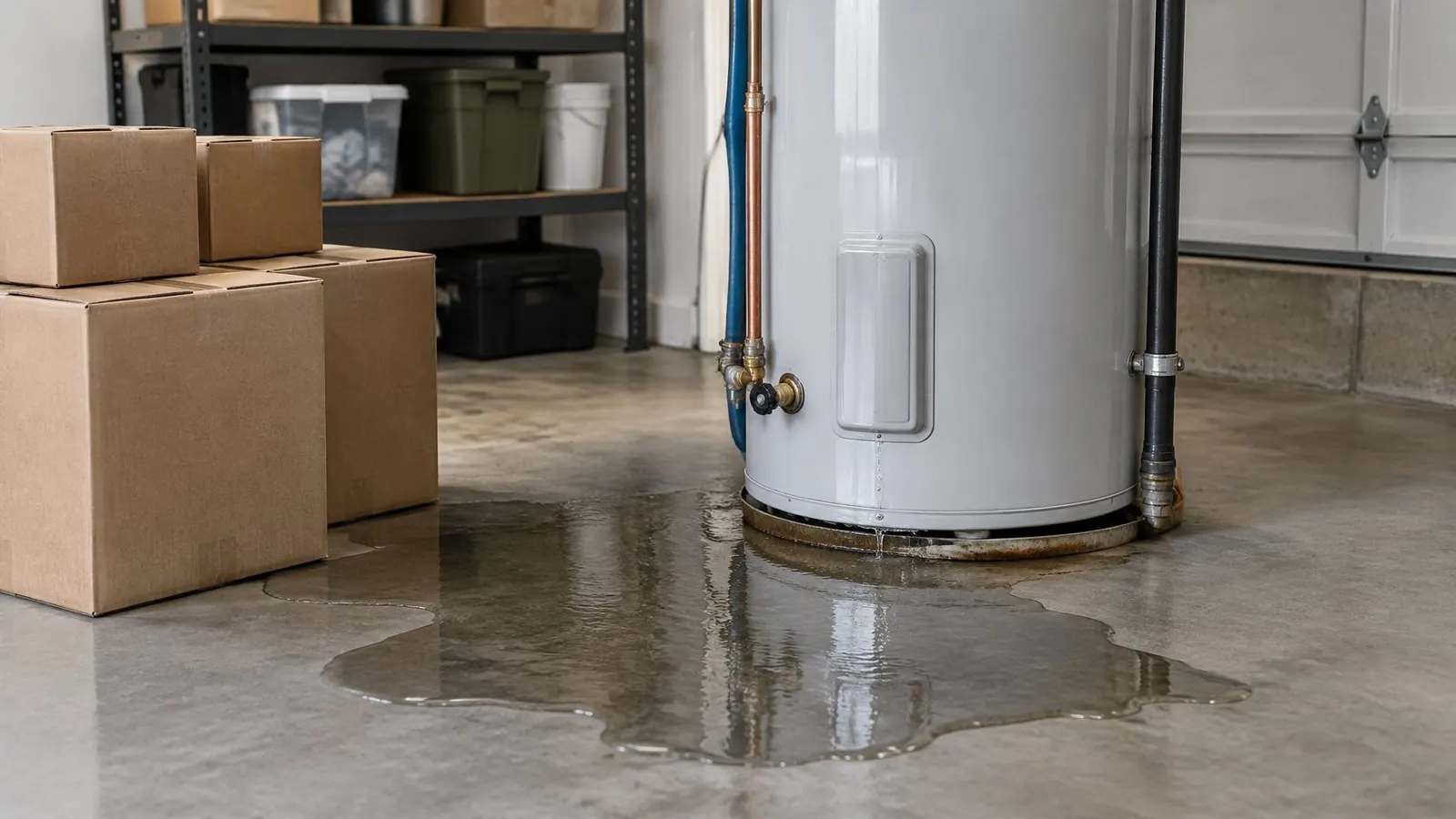
Small leaks, wide spread
Appliance leaks are often slow and out of sight. A dishwasher supply line can wet the subfloor under the cabinet for weeks before the toe-kick swells. An air conditioner's condensate line can back up in the attic during a long, humid cooling season and soak the ceiling below.
Timing matters for insurance too. The Texas Department of Insurance notes that most policies cover sudden and accidental water damage but usually not gradual leaks, and that hidden water damage usually has to be reported within days of finding it (TDI).
Checklist
First moves for each appliance
Water heater
Close the cold-water valve above the tank and turn off the gas or the breaker. Keep clear of hot water.
Washer
Close both hose valves behind it. Check the hoses for bulges or cracks.
Dishwasher
Close the valve under the sink and switch off the circuit.
Fridge or ice maker
Close the small supply valve, often under the sink or behind the fridge.
AC condensate
Switch the system off at the thermostat until the drain line and pan are checked.
Look underneath
Lift a corner of nearby flooring or open a cabinet base to see how far water traveled.
Questions
Water Heater & Appliance Leaks, answered
Does replacing a water heater need a permit in San Antonio?
Plumbing work generally does. Homeowners must use licensed trade contractors for new plumbing components, except for limited homestead work (Development Services). Ask the plumber to pull the permit.
How do I find a slow leak?
Look for swollen cabinet bases, lifting laminate, a musty smell or a water bill that jumps. A contractor's meter and thermal camera can trace the wet area.
My dishwasher leaked once. Do I need anyone?
If water reached the subfloor or the cabinet base, yes, have it checked. Trapped moisture under cabinets is a common source of mold.
Services
Other kinds of damage
- Water Damage RestorationAny leak that soaked floors, walls or cabinets: water out, structure dried, materials replaced.
- Water Extraction & Structural DryingStanding water pulled out, then air movers and dehumidifiers until the readings say dry.
- Burst & Frozen PipesA pipe split in a freeze or a fitting let go: stop the water, then dry the wall cavities and floors.
- Flash Flood & Flooded Home CleanupRising water came in under doors: muddy floors, wet drywall and contaminated contents.
- Sewage Backup CleanupToilets or tubs backing up: contaminated water removed, surfaces sanitized, wet materials replaced.
- Storm & Roof Leak Water DamageStains spreading on the ceiling or wet attic insulation after a storm.
- Fire & Smoke DamageSoot, smoke odor and the water used to put the fire out.
- Mold Remediation (Licensed)Mold after a leak: referrals to firms with a Texas mold remediation license.
Leak, flood, smoke or mold
Talk it through with a San Antonio restoration contractor
Say where the water came from, which rooms it reached and roughly when it started. The contractor on the line can tell you what an inspection would look at and what they charge for it.
Water where it shouldn't be? Make one call.
The call goes to an independent restoration contractor that takes work in your part of Bexar County or the nearby suburbs.
Call (210) 750-1322Calls may be recorded for quality. How the line is paid: referral disclosure. What is kept: privacy.