San Antonio, TX
Storm & Roof Leak Water Damage in San Antonio, TX
Hard rain and wind can push water under shingles, around vents and through flashing. Call to talk with an independent restoration contractor about drying the attic, ceiling and walls.
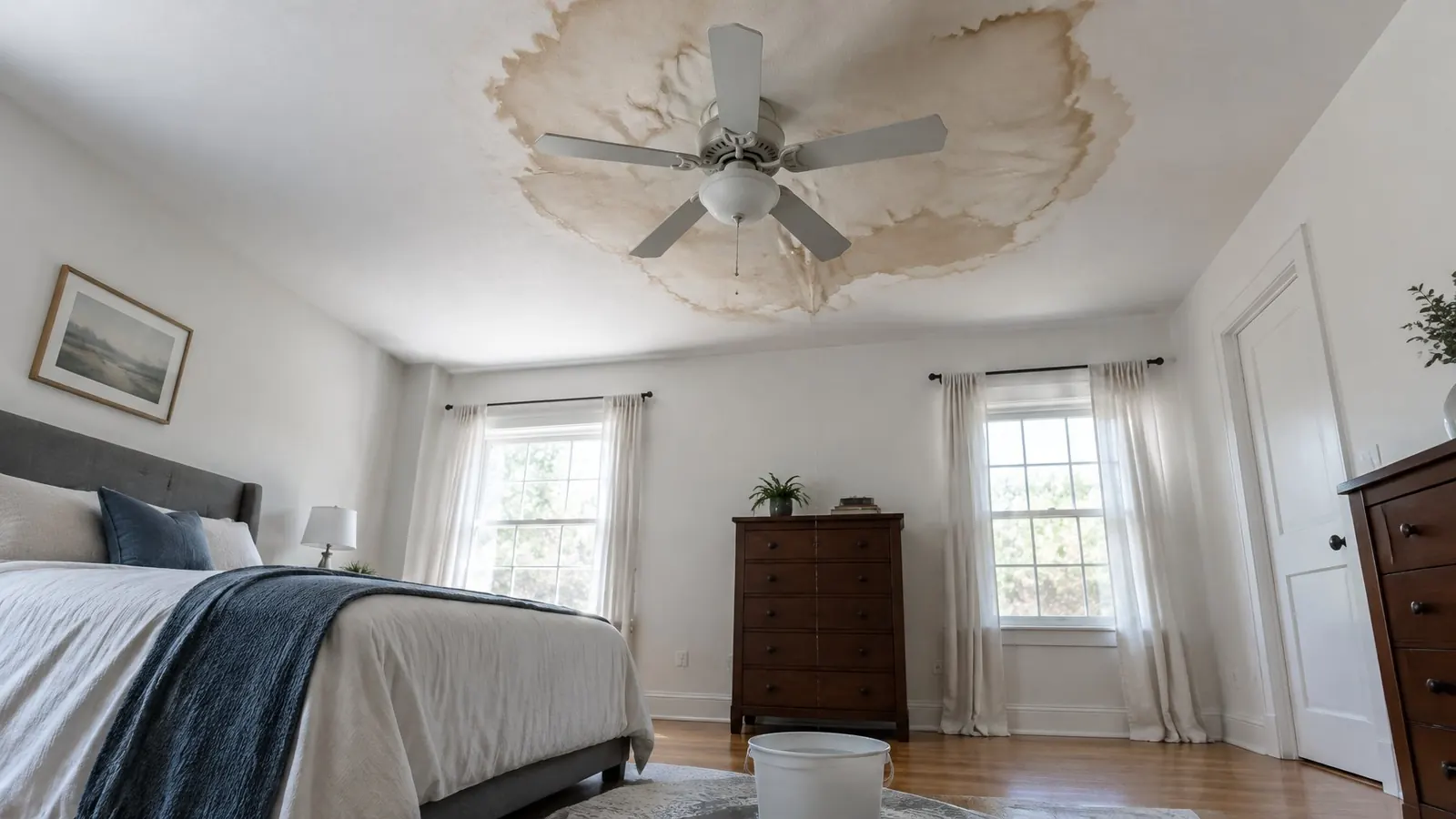
Water from above travels
A roof leak rarely drips where it starts. Water runs along decking, rafters and the upper face of the ceiling drywall before it finds a low spot, so the stain you see can be some distance from the opening. Attic insulation soaks it up and holds it against the ceiling.
Two trades are usually involved. A roofer seals the opening, often with a tarp first. A restoration contractor removes wet insulation, checks the ceiling with a meter, takes down drywall that has sagged and dries the framing so it doesn't stay damp under the new material.
Checklist
Steps that help
Catch the drips
Buckets and towels, and move furniture and electronics out of the way.
Watch for sagging
A bulging ceiling can hold water. Keep people out from under it and let a professional drain it.
Turn off ceiling fixtures
Switch off lights and fans in the wet area at the breaker.
Get the roof covered
A temporary tarp limits further damage, and insurers usually expect you to protect the home.
Photograph the attic
If it is safe to look, pictures of wet insulation and decking help later.
Keep receipts
For tarps, buckets, fans and any emergency work.
Questions
Storm & Roof Leak Water Damage, answered
My ceiling stain is dry now. Is it fine?
A dry stain can hide wet insulation or damp framing above. A moisture meter on the ceiling and a look in the attic settle it.
Do I need a permit for roof work?
San Antonio's no-permit list covers cosmetic work such as painting and repairing sheet rock; roofing is not on it. Ask the roofer, or Development Services at 210-207-1111.
Who should I call first, roofer or restoration?
Stop the water first. If rain is still coming in, a tarp from a roofer comes before drying. A restoration contractor can often coordinate both.
Services
Other kinds of damage
- Water Damage RestorationAny leak that soaked floors, walls or cabinets: water out, structure dried, materials replaced.
- Water Extraction & Structural DryingStanding water pulled out, then air movers and dehumidifiers until the readings say dry.
- Burst & Frozen PipesA pipe split in a freeze or a fitting let go: stop the water, then dry the wall cavities and floors.
- Flash Flood & Flooded Home CleanupRising water came in under doors: muddy floors, wet drywall and contaminated contents.
- Sewage Backup CleanupToilets or tubs backing up: contaminated water removed, surfaces sanitized, wet materials replaced.
- Water Heater & Appliance LeaksWater heater, washer, dishwasher, fridge line or AC drain: find the wet areas and dry them.
- Fire & Smoke DamageSoot, smoke odor and the water used to put the fire out.
- Mold Remediation (Licensed)Mold after a leak: referrals to firms with a Texas mold remediation license.
Leak, flood, smoke or mold
Talk it through with a San Antonio restoration contractor
Say where the water came from, which rooms it reached and roughly when it started. The contractor on the line can tell you what an inspection would look at and what they charge for it.
Water where it shouldn't be? Make one call.
The call goes to an independent restoration contractor that takes work in your part of Bexar County or the nearby suburbs.
Call (210) 750-1322Calls may be recorded for quality. How the line is paid: referral disclosure. What is kept: privacy.