San Antonio, TX
Water Damage Restoration in San Antonio, TX
A split supply line, a tub that ran over, a slab leak surfacing through the tile or rain through the ceiling. Call and talk to an independent restoration contractor that works in San Antonio.
What the work involves
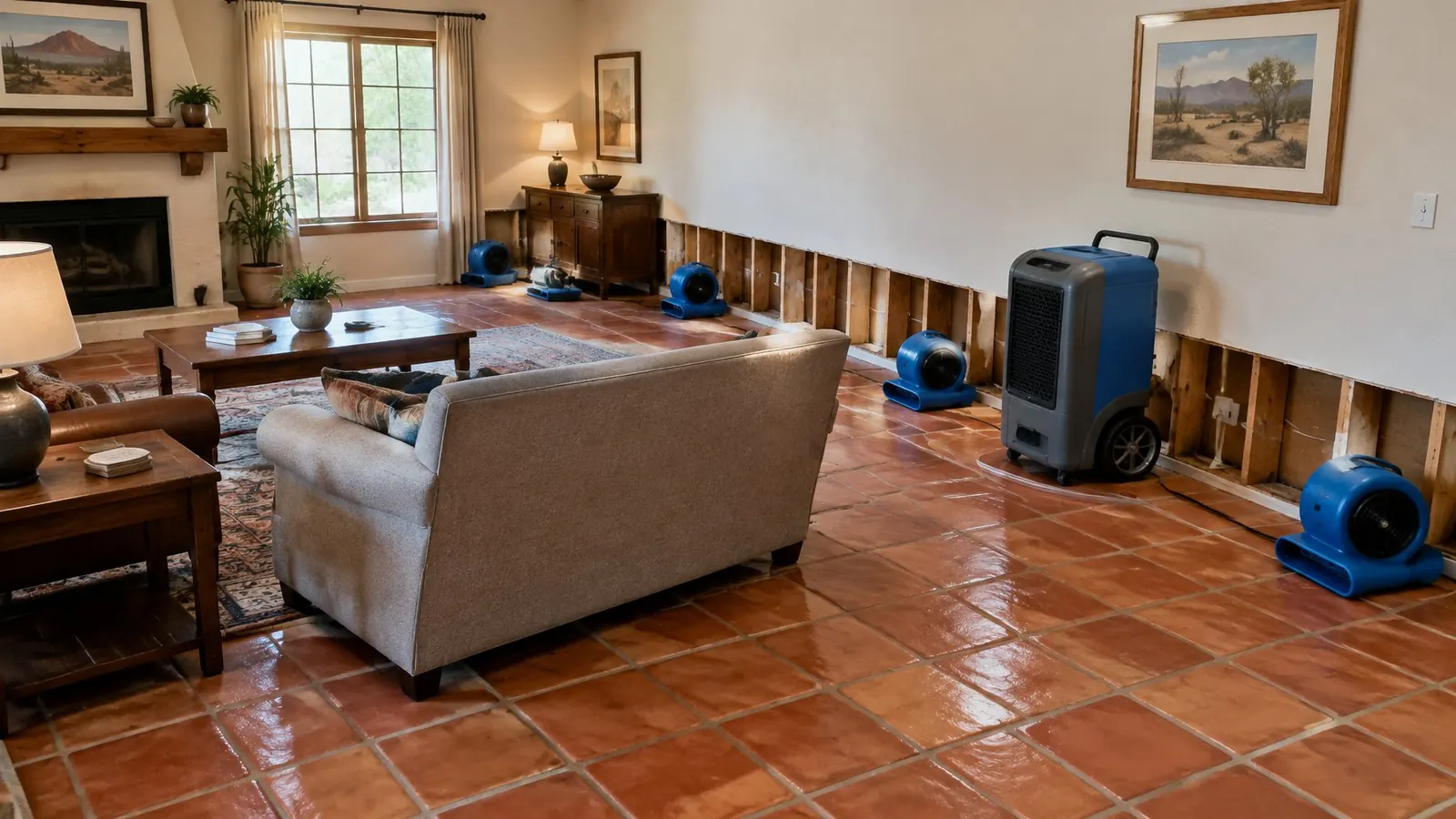
Restoration happens in a set order. The source gets stopped, standing water is pulled out with pumps and extractors, and then the house is dried with air movers and dehumidifiers until moisture readings come back to normal. Repairs come last, once the structure has been confirmed dry.
On a house built on a concrete slab and finished with tile, laminate or carpet, water slips under baseboards and wicks into the bottom of the drywall quickly, while the slab itself gives up moisture slowly. That is why the drying stage is measured with meters and logged, rather than judged by how the floor looks.
Where the water came from
Clean, gray or contaminated
Restoration contractors sort water by how dirty it is, because that decides what can be dried and what has to go.
Supply water
A burst supply pipe, a failed ice-maker line or an overflowing sink with clean tap water. Caught early, most materials can be dried in place.
Used household water
Washer and dishwasher discharge, or a toilet overflow without waste. It carries soap, food and some bacteria, so carpet pad often goes and surfaces get cleaned.
Sewage and floodwater
Sewer backups and water that came in from outside. Porous materials it touched are usually removed, and the rest is disinfected before drying.
San Antonio
Before repairs start
Not every repair needs the city. Development Services lists repairing sheet rock, painting, tiling, cabinets and wood or laminate flooring among jobs that typically need no permit (No Permit Required list). Properties in historic, neighborhood conservation or corridor districts can still face rules on design and materials.
Work on plumbing, electrical and HVAC is different. The city requires licensed trade contractors for new components in those systems, and registered home improvement or residential building contractors can pull other permits on your behalf (residential permits). The One Stop center is at 1901 S. Alamo St.
Checklist
Questions worth asking on the first visit
What is coming out?
Wet carpet pad, baseboards and a strip of drywall are often removed so walls can dry. Ask for the reason behind each cut.
How is dryness proven?
Ask for daily readings in writing, taken at the same spots, until the numbers match a dry reference area.
How long will the equipment run?
Air movers and dehumidifiers usually run for days. Ask how many units, how loud they are and which outlets they will use.
Who rebuilds?
Some firms dry and leave; others also replace drywall, paint and flooring. Know which you are hiring for.
Does anything need a permit?
In San Antonio, repairing sheet rock, painting and replacing flooring are on the city's no-permit list. Plumbing and structural work are not.
What will the paperwork show?
Photos, the moisture log and an itemized scope help with your own records and any insurance conversation.
Questions
Water Damage Restoration, answered
How many days of drying should I expect?
For clean water caught early, several days of equipment is common. Tile over a slab, hardwood, cabinets and water that sat for a while all stretch that out. The meter readings decide when it is finished.
Will they have to take out my tile?
Not always. Well-bonded tile over a slab can often stay while the room dries. Loose or hollow-sounding tiles, swollen laminate and wet carpet pad are a different story. Ask the contractor to show you what they found.
Do I need to be home?
For the first inspection, yes, so you can approve what gets removed. After that, ask the contractor how often they need to come in to check readings and move equipment.
Services
Other kinds of damage
- Water Extraction & Structural DryingStanding water pulled out, then air movers and dehumidifiers until the readings say dry.
- Burst & Frozen PipesA pipe split in a freeze or a fitting let go: stop the water, then dry the wall cavities and floors.
- Flash Flood & Flooded Home CleanupRising water came in under doors: muddy floors, wet drywall and contaminated contents.
- Sewage Backup CleanupToilets or tubs backing up: contaminated water removed, surfaces sanitized, wet materials replaced.
- Storm & Roof Leak Water DamageStains spreading on the ceiling or wet attic insulation after a storm.
- Water Heater & Appliance LeaksWater heater, washer, dishwasher, fridge line or AC drain: find the wet areas and dry them.
- Fire & Smoke DamageSoot, smoke odor and the water used to put the fire out.
- Mold Remediation (Licensed)Mold after a leak: referrals to firms with a Texas mold remediation license.
Leak, flood, smoke or mold
Talk it through with a San Antonio restoration contractor
Say where the water came from, which rooms it reached and roughly when it started. The contractor on the line can tell you what an inspection would look at and what they charge for it.
Water where it shouldn't be? Make one call.
The call goes to an independent restoration contractor that takes work in your part of Bexar County or the nearby suburbs.
Call (210) 750-1322Calls may be recorded for quality. How the line is paid: referral disclosure. What is kept: privacy.